Introduction
In the dynamic world of energy trading, technology plays a pivotal role in supporting and enhancing the Energy Trading and Risk Management (ETRM) functions. From market analysis to trade execution and risk management, advanced technological solutions provide the necessary tools and capabilities to navigate the complexities of the energy markets efficiently and effectively.
Technology Supporting ETRM
This article explores the various ways in which technology supports ETRM process and functions and its transformative impact on the industry.
Market Analysis and Data Management
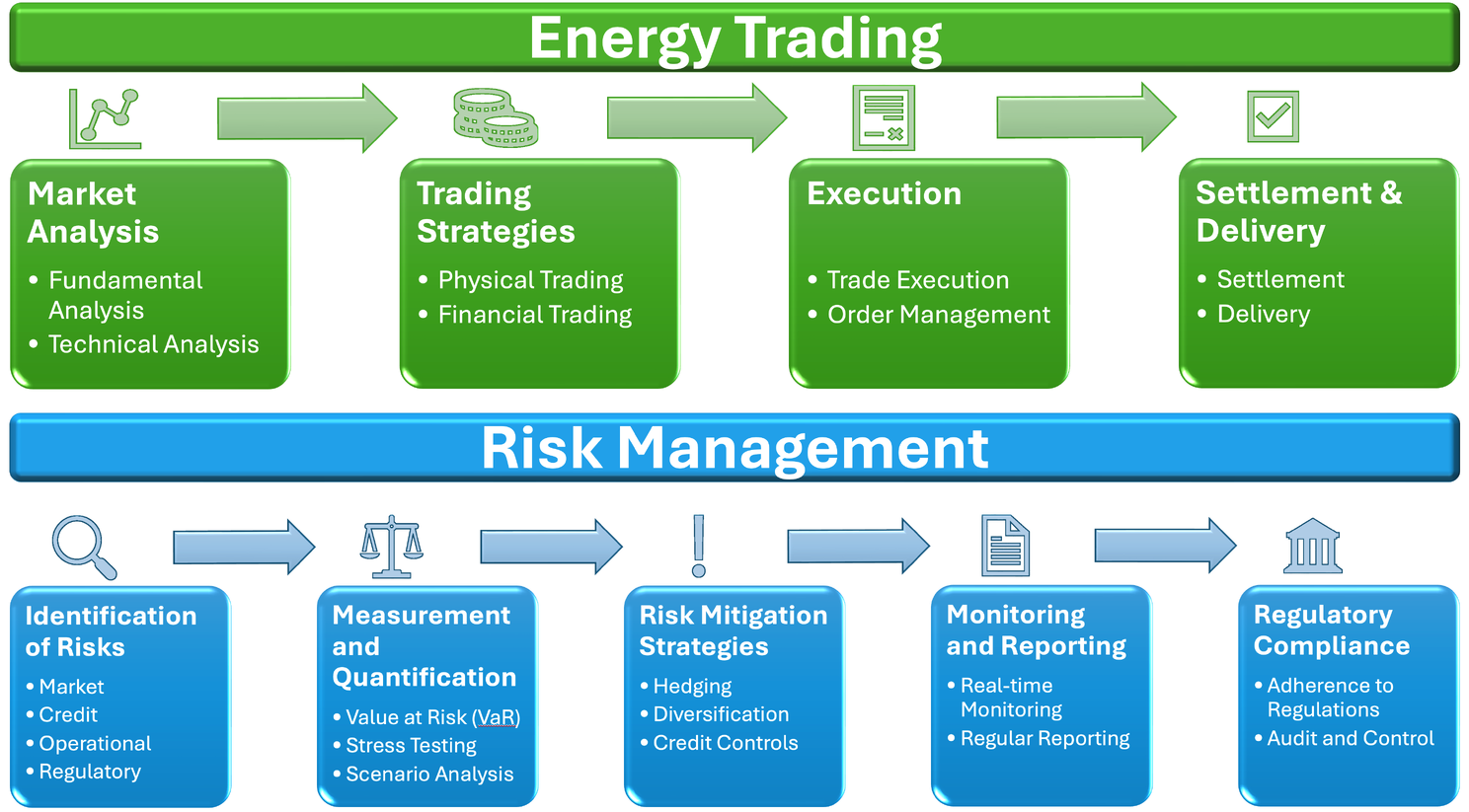
One of the fundamental aspects of energy trading is market analysis, which involves understanding market trends, price movements, and the factors influencing supply and demand. Technology facilitates this process through sophisticated data management and analytics tools.
Modern ETRM systems integrate vast amounts of market data from various sources, including historical price data, real-time market feeds, weather forecasts, and geopolitical news. Advanced data analytics platforms utilise machine learning algorithms to analyse this data, identify patterns, and generate predictive insights. These insights enable traders to make informed decisions based on a comprehensive understanding of market dynamics.
For instance, predictive analytics can forecast price movements by analysing historical data and recognising trends that precede significant market shifts. This capability allows traders to anticipate changes and adjust their strategies accordingly, thereby maximising profitability and minimising risk.
Trading Platforms and Execution
Efficient trade execution is crucial in energy trading, where market conditions can change rapidly. Technology provides the infrastructure for seamless trade execution through advanced trading platforms. These platforms offer a range of functionalities, including order management, trade execution, and post-trade processing.
Automated trading systems, also known as algorithmic trading, have revolutionised the energy trading landscape. These systems execute trades based on predefined algorithms and market conditions, reducing the time lag between decision-making and trade execution. Automated trading enhances efficiency, reduces the likelihood of human error, and allows traders to capitalise on market opportunities in real time.
Moreover, electronic trading platforms facilitate access to multiple markets and exchanges, providing traders with a broader range of trading opportunities. These platforms offer transparency, liquidity, and efficiency, enabling traders to execute trades quickly and at competitive prices.
Risk Management and Analytics
Risk management is a critical component of ETRM functions, as the energy markets are inherently volatile and subject to various risks. Technology supports risk management by providing sophisticated tools for risk assessment, measurement, and mitigation.
One of the key technological advancements in risk management is the use of Value at Risk (VaR) models. VaR is a statistical technique that quantifies the potential loss in value of a portfolio over a defined period for a given confidence interval. ETRM systems leverage VaR models to measure market risk and provide insights into the potential impact of adverse price movements on the portfolio.
Stress testing and scenario analysis are other important risk management techniques enabled by technology. Stress testing involves evaluating the impact of extreme but plausible adverse market conditions on the portfolio, while scenario analysis assesses the effects of specific events, such as geopolitical crises or natural disasters. Advanced ETRM systems can simulate these scenarios and provide comprehensive risk assessments, allowing traders to develop strategies to mitigate potential losses.
In addition to market risk, technology also supports the management of credit risk and operational risk. ETRM systems track the creditworthiness of counterparties, monitor exposure limits, and provide alerts when limits are breached. Operational risk management tools identify and address risks arising from internal processes, systems, or external events, ensuring the smooth functioning of trading operations.
Regulatory Compliance and Reporting
The energy trading industry is subject to stringent regulatory requirements aimed at ensuring market integrity, transparency, and stability. Compliance with these regulations is a complex and resource-intensive task. Technology plays a crucial role in streamlining regulatory compliance and reporting processes.
Modern ETRM systems are designed to comply with regulatory frameworks such as the Dodd-Frank Act and the Markets in Financial Instruments Directive (MiFID II). These systems automate the collection, storage, and reporting of transaction data, ensuring that all regulatory requirements are met. They also provide audit trails and documentation, facilitating regulatory audits and inspections.
Moreover, advanced analytics and reporting tools enable traders to generate accurate and timely reports for regulators, investors, and other stakeholders. These reports provide insights into trading activities, risk exposures, and compliance status, enhancing transparency and accountability.
Integration and Interoperability
The energy trading landscape is characterised by a diverse array of systems, platforms, and data sources. Integration and interoperability are critical to ensuring that these disparate systems work together seamlessly. Technology facilitates integration through the use of application programming interfaces (APIs) and standardised data formats.
ETRM systems integrate with various trading platforms, market data providers, risk management tools, and other enterprise systems. This integration enables the seamless flow of data and information across the organisation, providing a unified view of trading activities and risk exposures. It also enhances operational efficiency by reducing the need for manual data entry and reconciliation.
Blockchain and Distributed Ledger Technology
Blockchain and distributed ledger technology (DLT) are emerging technologies with the potential to transform energy trading and risk management. These technologies provide a secure, transparent, and immutable record of transactions, enhancing trust and reducing the risk of fraud.
In energy trading, blockchain can facilitate peer-to-peer trading, enabling market participants to trade directly with each other without the need for intermediaries. This can reduce transaction costs and increase market efficiency. Additionally, blockchain can enhance the transparency and traceability of transactions, ensuring that all market participants have access to accurate and verifiable information.
Conclusion
Technology is a driving force behind the evolution of energy trading and risk management. Advanced ETRM systems, data analytics, automated trading platforms, and emerging technologies such as blockchain are transforming the way energy markets operate. These technological advancements enhance market analysis, trade execution, risk management, regulatory compliance, and integration, providing traders with the tools and capabilities to navigate the complexities of the energy markets effectively.
As technology continues to evolve, its role in supporting ETRM functions will only become more critical. Market participants who leverage the latest technological solutions will be better positioned to capitalise on market opportunities, manage risks, and comply with regulatory requirements, ensuring their long-term success in the dynamic world of energy trading.